



Attracting Bees and Butterflies to Your Garden
Why Your Garden Matters More Than You Think
Pollinators are having a hard time of it. As hedgerows vanish and farmland becomes more uniform, gardens have quietly become some of the richest feeding grounds left in Britain. Yours does not need to be large or immaculate — a modest patch of the right flowers can keep a bumblebee colony fed for weeks. What matters is planting with purpose, then giving insects somewhere to drink, rest and shelter.
The good news is that all of this is easy, cheap and genuinely satisfying. Start with flowers, add water, resist the urge to tidy too much, and you will notice the difference by midsummer.
Plant Open-Faced Flowers, Not Frilly Ones
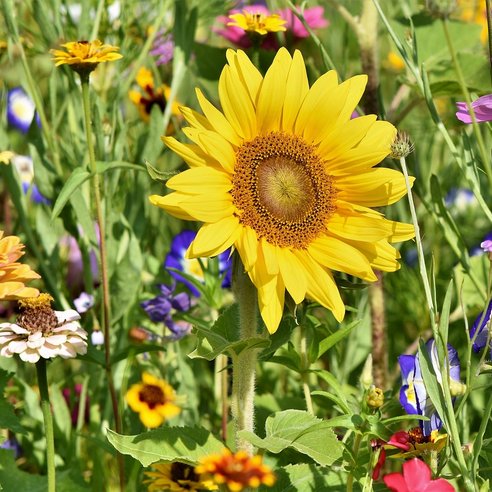
The single most useful rule is to choose open, single flowers. Double blooms and heavily bred varieties often have petals where the nectar should be, or produce almost no pollen at all. Anything with a visible, accessible middle is usually a winner. That rules out much of the bedding plant aisle: busy lizzies, begonias, pelargoniums and double petunias offer colour but precious little food. Many F1 hybrids are similarly disappointing.
- Spring: crocus, hellebores, wallflowers, flowering currant and pussy willow — vital for early bumblebee queens emerging from hibernation.
- Early summer: foxgloves, hardy geraniums, salvia, comfrey, chives, thyme and lavender.
- High summer: borage, marjoram, cosmos, single dahlias, coneflowers, scabious, verbena and helenium.
- Late summer and autumn: asters, sedum, Japanese anemones and ivy, which is a lifesaver in October when little else is open.
Herbs earn their place twice over. Thyme, oregano, marjoram, lavender and borage are magnets for bees and perfectly usable in the kitchen, so let a few stems run to flower instead of picking every last leaf. Aim for a succession of blooms from March to October rather than one glorious fortnight in July.
Let Native Wildflowers Do Some of the Work
Our native plants evolved alongside our insects, so they are reliably useful. A small wildflower patch — even a metre square — will pull in solitary bees, hoverflies and butterflies that ignore fancier planting. You can sow a native seed mix on bare soil in spring or autumn, or buy plug plants if you would rather not gamble on germination.
- Oxeye daisy
- Field poppy
- Cornflower
- Yarrow
- Common knapweed
- Bird's-foot trefoil
- Red clover
- Wild marjoram
- Teasel, which feeds goldfinches once the bees have finished
If all you have is a lawn, simply let a patch grow long. Clover, daisies and dandelions are superb early food, and a scruffy corner saves you mowing. Mow the rest as normal and you will barely notice the untidiness — the bees certainly will.
Give Them a Drink
Nectar is a sugary drink, and pollinators get thirsty. A shallow saucer of water with a few pebbles or marbles gives bees and butterflies somewhere safe to land without drowning. Top it up every couple of days in hot spells, and place it in partial shade so it does not dry out.
- Set the saucer at ground level among plants, where insects naturally forage.
- Butterflies prefer damp bare soil or a patch of wet gravel, where they take up minerals — leave a small area unplanted and water it occasionally.
- If you have space, a pond with gently sloping or stepped edges is unbeatable for wildlife. Avoid steep-sided containers with no shallow shelf.
- A shallow bird bath doubles as a drinking station for bees if you add a stone ramp.
Offer Shelter and Somewhere to Overwinter
Flowers bring pollinators in; shelter keeps them. Solitary bees nest in dry hollow stems, crumbling mortar, bare earth and old logs, while butterflies and lacewings need somewhere sheltered to ride out the cold.
- Face a bee hotel south or south-east, about a metre off the ground, and keep it dry.
- Leave hollow plant stems standing over winter rather than cutting everything back in October.
- Build a small log pile or leave a patch of leaf litter in a quiet corner.
- Allow ivy to clamber — it is both a late nectar source and a hibernation site for brimstone and holly blue butterflies.
- Let a few nettles grow at the back of a border; they are the caterpillar food plant for peacock, small tortoiseshell and red admiral.
Put the Pesticides Away
This is the one non-negotiable. Even products sold as natural or organic, including pyrethrum-based sprays, will kill bees and butterflies along with the pests. Slug pellets are equally damaging, as slugs are food for hedgehogs, birds and ground beetles.
Instead, accept a little damage and let nature balance things out. Ladybirds, hoverflies and lacewings will arrive to deal with aphids if you give them a week or two, and a healthy garden with varied planting rarely suffers serious infestations. Use barriers, nematodes or an evening torchlight patrol against slugs, and squash aphids by hand on prized plants.
Tolerate a few nibbled leaves, leave the seed heads on through winter, and keep that saucer topped up. Within a season your garden will be humming, fluttering and far more alive than any tidy, spray-happy plot on the street.

Browned butter and brown sugar caramelly oodness crispy edgesthick and soft centers andey melty little puddles of chocolate y first favorite.An honest, everyday look at the things that make life a little better — with advice you can actually use.
Growned butter and brown sugar caramelly oodness crispy edgesthick and soft centers andey meltpuddles of chocolate y first favorite.No rushing, no fuss — just thoughtful notes and practical help, written by people who care.
Even a half barrel can support frogs and insects. Add native oxygenators, a gentle ramp and leave the edges wild.
Thomas A. Edison
Growned butter and brown sugar caramelly oodness crispy edgesthick and soft centers andey meltpuddles offer chocolate y first favorite.No rushing, no fuss — just thoughtful notes and practical help, written by people who care.e breathing, we blessed. Surround yourself with angels.

Customer Engagement Marketing New Strategy for the Economy
Leave a wild patch, provide shallow water and check before strimming. A small gap in fencing lets hedgehogs roam freely.
- Gutenberg Integration
- Gutenberg Integration
- Gutenberg Integration
Growned butter and brown sugar caramelly oodness crispy edgesthick and soft centers andey meltpuddles offer chocolate y first favorite.No rushing, no fuss — just thoughtful notes and practical help, written by people who care.e breathing, we blessed. Surround yourself with angels.

Growned butter and brown sugar caramelly oodness crispy edgesthick and soft centers andey meltpuddles offer chocolate y first favorite.Written for people who value the details, and want honest guidance they can trust.e breathing, we blessed. Surround yourself with angels.

Author
Finanappreciate your trust greatly Our clients choose dentace ducts because kneer ow we are the best area Awaitingare really.
Previous Post

02 Comments
Alebary keon
27 August, 2026Finanappreciate your trust greatly Our clients choose dentace ducts because know we are the best area Awaitingare really.
Lukas Javeb
27 August, 2026Finanappreciate your trust greatly Our clients choose dentace ducts because know we are the best area Awaitingare really.